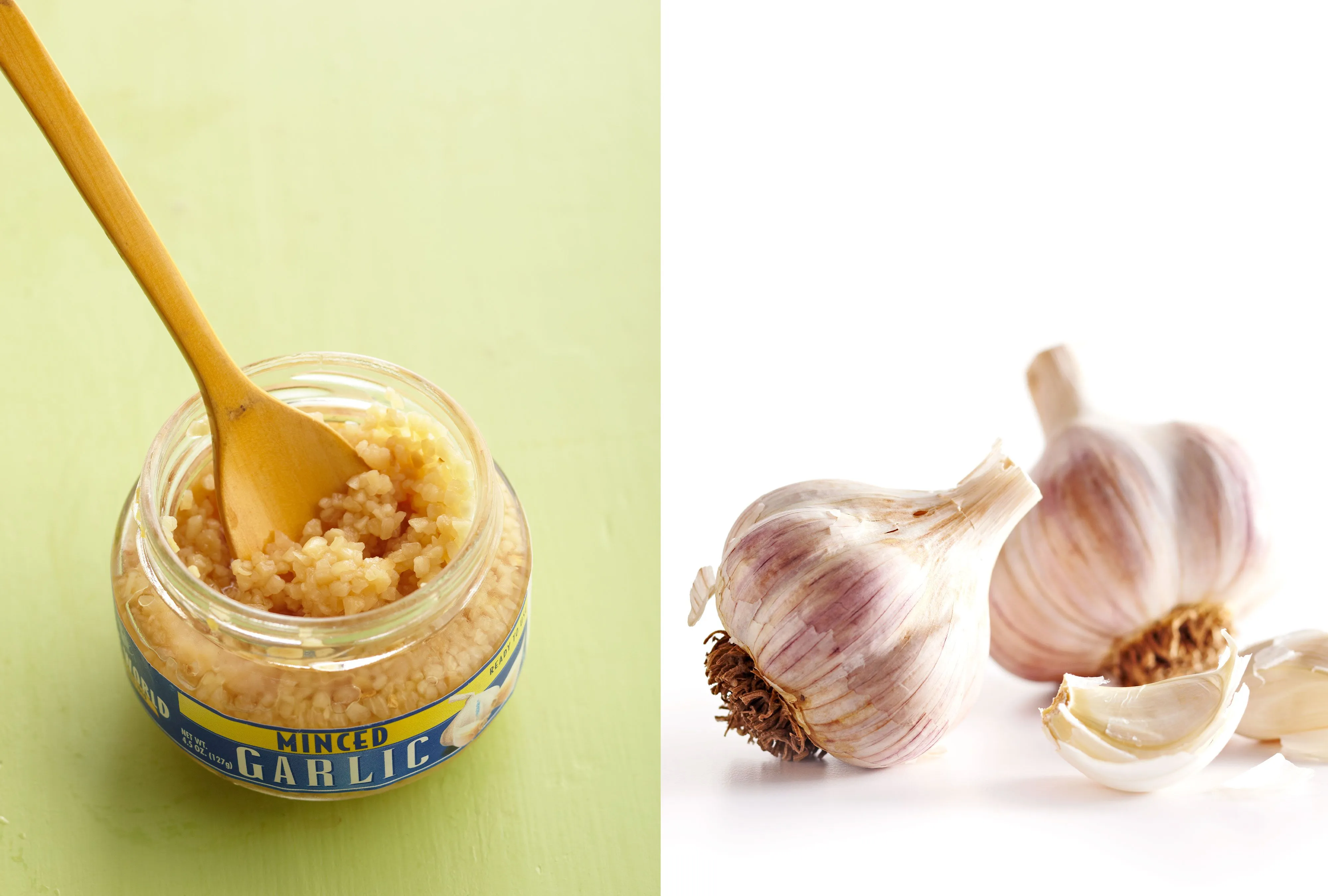
Anytime there’s garlic on the ingredient list for a recipe, my motto is, “measure with your heart.” Generally, this means I at least double the quantity called for, because I’ve yet to discover the threshold at which I think there’s too much garlic. (Samin Nosrat’s 10-clove Pane Criminale is one of a few recipes I think has the just-right ratio of garlic to everything else!)
Because I’m such a fan, I often stock up on Costco-sized collections of bulbs so I always have plenty of the aromatic ingredient on hand. But I’ll be honest: I’m getting a little tired of peeling, cleaning, and chopping clove after clove. The last time I was visiting my parents, I spotted a jar of pre-minced garlic (aka jarlic) in their fridge, and began to wonder, could that be my quick-fix solution—both to trim down on prep time and reduce the risk of garlic-scented hands?
I turned to a panel of pros to find out—and to see if there were any other shortcut solutions to score garlic flavor fast.
- Lauren Grant-Vose is the founder of Zestful Kitchen and is based in Minneapolis, MN.
- Megan Meyer, PhD, is a science communication consultant in Washington, D.C.
- Eric Jenkins is a virtual chef instructor at Auguste Escoffier School of Culinary Arts and is based in Columbus, OH.
Fresh Garlic vs. Pre-Minced Garlic: What’s the Difference?
According to Auguste Escoffier School of Culinary Arts chef instructor Eric Jenkins, “jarred garlic is functional. Fresh garlic is expressive. If you love fresh garlic, you know it’s not just an ingredient; it’s a personality. It transforms everything it touches.” (No wonder brands sell shirts that say “Needs More Garlic” and “I ❤Garlic.”)
So how does pre-minced garlic compare? Here’s the difference between the two:
Fresh Garlic
- Flavor: Raw garlic is fiery, sharp, savory, and almost spicy in flavor. When sautéed, it turns sweet, nutty, and mellow, Jenkins says. If it’s roasted, the garlic transforms into a creamy, caramelized, and almost buttery flavor booster.
- Texture: Fresh garlic is firm and crunchy, confirms science communication consultant Megan Meyer, PhD. Since it releases allicin (a compound that forms a residue on the exterior) as you’re cutting it, diced, sliced, or minced garlic can feel slightly sticky, Meyer adds. When roasted, garlic becomes spreadable and silky.
- Aroma: The smell of fresh garlic is sharp, bright, pungent, and “hot” in a way that can help clear out your sinuses, explains recipe developer Lauren Grant-Vose. It’s unmistakably sulfurous, Jenkins verifies, but is also green and vibrant.
Minced Garlic
- Flavor: Pre-minced garlic is much milder than its fresh counterpart. Compared to fresh garlic, “the taste is more one-dimensional with less heat than raw garlic. It’s also less sweet once cooked,” Jenkins says. Due to the liquid it’s stored in, garlic can sometimes taste slightly sour.
- Texture: Jarred garlic is minced in a very uniform shape, with a softer, wetter consistency than freshly minced raw cloves.
- Aroma: On the nose, minced garlic is milder and slightly acidic from the preservatives in the storage solution.
When to Use Fresh Cloves and When to Use Minced Garlic
While jarred minced garlic is convenient and appealing on busy nights, the fact that it’s sitting in a liquid (usually water, oil, or citric acid) tends to dull its flavor and flatten its aroma, Jenkins tells BHG. For this reason, all three of our culinary pros consider fresh garlic cloves as plan A. Jarred pre-minced garlic is their plan B when they’re crunched for time.
“Growing up in a predominantly Italian neighborhood in New York in the 1970s shaped my love for real Italian food—and along with it, my education into the world of garlic,” Jenkins says. “I almost always buy fresh garlic, because fresh garlic is alive. It changes depending on how you cut it, cook it, smash it, or let it rest. That versatility is magic in a way jarred garlic just can’t replicate.”
Use fresh garlic when it’s a key component of a dish, or if you’d like to amplify the flavor, be it bold, sweet, or buttery. Use it in:
- Garlic-forward pastas, such as spaghetti aglio e olio or garlic noodles
- Garlic bread
- Stir-fries
- Salad dressings and sauces
- Roasted vegetables
- Soffrito
- Any dish where garlic is sautéed briefly and meant to shine
Pre-minced garlic is fine when “it isn’t the star—it’s part of a chorus,” Jenkins says. Try it in recipes for:
- Soups and stews
- Braised meats
- Tomato-based sauces
- Slow-cooker meals
- Marinades with other punchy ingredients, such as soy sauce, vinegar, or chili paste
- Meatballs, meatloaf, or homemade burgers
Related
Preparing Each Type of Garlic for Maximum Flavor
True, you have to sacrifice a bit in terms of flavor, texture, aroma, and versatility if you start with jarlic. But it couldn’t be easier to prep. Simply stock a jar of pre-minced garlic in your fridge, and measure it out to add to recipes as desired.
Test Kitchen Tip: One medium clove of garlic is equivalent to about 1/2 teaspoon minced garlic. One large clove is approximately 3/4 to 1 teaspoon.
Fresh garlic requires slightly more hands-on time, but it’s not complicated to get the cloves recipe ready.
How to Peel Fresh Garlic
There are three effective ways to peel the thin, papery skin off garlic cloves, Grant-Vose and Jenkins tell us.
- Smash. Place a chef’s knife sideways on top of a clove. Using the heel of your hand, firmly and carefully smack the flat knife surface. Now it should be easy to remove the wrapper and cut the garlic as desired. (Keep in mind that this method bruises the garlic, so it should be reserved for recipes where you are chopping or mincing the garlic,” according to Grant-Vose.)
- Shake. Transfer one or a few garlic cloves to a mason jar. Twist on the lid and shake vigorously for about 15 seconds. The skins should fall away.
- Peel. Locate the hard, sharp end where the clove was affixed to the whole bulb, and use your fingernail (or a paring knife) to peel back the paper. Once you get a corner peeled off, the rest should slide off easily.
How to Cut Garlic
Certain recipes call for using garlic cloves whole—such as in infused oils and sauces, roasts, and slow-simmered sauces. To spread the flavor around, though, most dishes call for sliced, chopped, or minced. The pros coach us through each of these techniques:
- Slicing: Place the clove as flat against the cutting board as possible, then thinly slice into planks.
- Try it for Garlic Butter Steak Bites
- Chopping: Thinly slice the clove into planks, then slice again lengthwise into strips. Rotate the strips and slice crosswise into chunks.
- Try it for Pesto
- Mincing: Follow the same steps as above, then continue chopping until it’s very fine and nearly a paste. For an ultra-fine mince or pasted garlic, sprinkle a pinch of salt and smear the mixture around with the flat part of your knife blade until you reach your desired consistency.
- Try it for Cheesy Garlic Swirl Rolls
Other Types of Garlic to Try
Jarlic is far from your only speedy substitute for fresh garlic. In fact, the pros prefer the following over pre-minced garlic, depending on the scenario. If you, too, adore garlic, consider adding the following ingredients to your arsenal.
- Pre-Peeled Whole Cloves: Pre-peeled garlic sold in tubs or bags is a very convenient option. Peeling is often the most frustrating aspect of fresh garlic, and this removes that hurdle, Grant-Vose says. “This is my favorite compromise, because you can still control how you cut it. Just make sure you check the freshness, based on the date on the package,” Jenkins adds.
- Frozen Garlic Cubes: Just crushed or pasted garlic frozen to lock in the flavor, this is a convenient alternative for cooked occasions.
- Tube Garlic Paste: Jenkins prefers this over pre-minced jars of garlic, due to its “smoother texture and a brighter taste.”
- Garlic Powder: This spice cabinet staple lends background savoriness and is ideal in dry rubs, to season popcorn, for scrambled eggs, or mixed with butter to spread on bread or top steaks. To substitute fresh garlic with dried, Grant-Vose recommends 1/8 teaspoon per 1 small clove or 1/2 teaspoon minced garlic.
- <span>Recipes & Cooking</span>
- <span>How to Cook</span>
- <span>Ingredient Explainers</span>
New